Fathead – Ecommerce Frontend Rebuild
Ecommerce Web Application
Modernizing a legacy ecommerce frontend within a large engineering team
Technologies
React, JavaScript (ES6+), TypeScript, HTML5, CSS3 (SCSS), Vue.js, jQuery, Proprietary Ecommerce Systems
Role
Frontend Developer
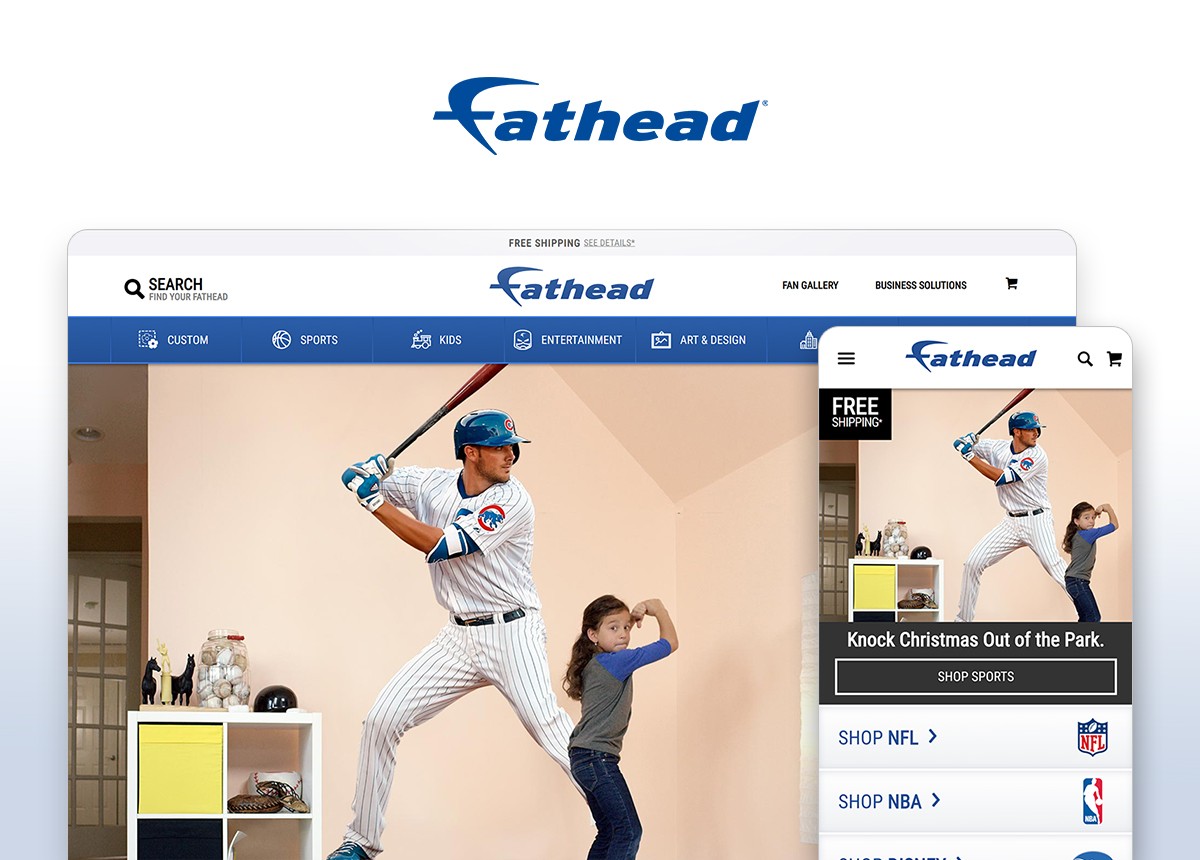
My Role
I worked as a frontend developer within a cross-functional ecommerce engineering team that included backend developers, QA engineers, database administrators, project managers, and business analysts.
My primary responsibility was modernizing and stabilizing the frontend layer during a broader platform refresh. This involved refactoring large portions of the existing JavaScript codebase and contributing to feature development across catalog and product pages.
I collaborated closely with backend engineers to ensure frontend changes aligned with existing services and data structures, and participated in QA and regression cycles prior to deployment.
Toward the end of the project, I created internal documentation outlining the frontend architecture and build process and led knowledge transfer sessions to onboard my replacement, ensuring continuity within the team.
Approach
The frontend operated on top of a legacy codebase with limited documentation, requiring careful analysis before any refactoring. Rather than introducing disruptive rewrites, updates were made incrementally to preserve compatibility with backend services and existing ecommerce workflows.
A significant portion of the work involved restructuring legacy JavaScript, into more maintainable, modular patterns. A better build pipeline was introduced to standardize coding practices and reduce inconsistencies across the frontend codebase.
Interactive functionality was implemented where appropriate. The product catalog included dynamic search refinement built with React to support client-side filtering, while a “Design Your Wall” tool built with Vue.js allowed users to upload images and visualize decal placement in real time.
Asset bundling and task automation were managed through a Gulp-based build pipeline, which I helped formalize to improve reliability and deployment consistency.
Development followed structured QA and regression testing workflows to ensure stability within a production ecommerce environment.
Outcome
The frontend refresh modernized key customer-facing interactions and improved the structure and maintainability of the JavaScript codebase.
Introducing linting and a more consistent build process helped standardize frontend development practices and reduced long-term friction in maintaining the platform. The rebuild aligned the storefront with evolving frontend frameworks while operating within the constraints of an established ecommerce system.
Knowledge transfer documentation and onboarding sessions ensured continuity of the frontend architecture after my departure.
Other projects

Cruise Lines International Association – Vendor Member Directory
Authenticated directory application combining multiple CRM endpoints into a unified search experience

Thermatru – Component Library & Product Experience
Enterprise website rebuild involving reusable frontend components, product pages, and interactive features including geolocation and dealer lookup.

Test Management Systems, Inc. – Corporate Website Rebuild
Informational B2B website built for compliance, and vendor communication

Aquastar Pools – Lead Generation Website Redesign
Custom WordPress rebuild focused on credibility, performance, and local SEO

Alight – Workday Rising Campaign & Marketing Automation
Email and landing page development supporting a major enterprise conference presence

Lance & Momoko – Multilingual Event Web Application
Multilingual wedding event platform with structured RSVP workflow and data exporting

Status Quo – Automated Podcast Website
Brand identity and automated web platform built to support podcast growth and platform migration