Thermatru – Component Library & Product Experience
Enterprise Web Application
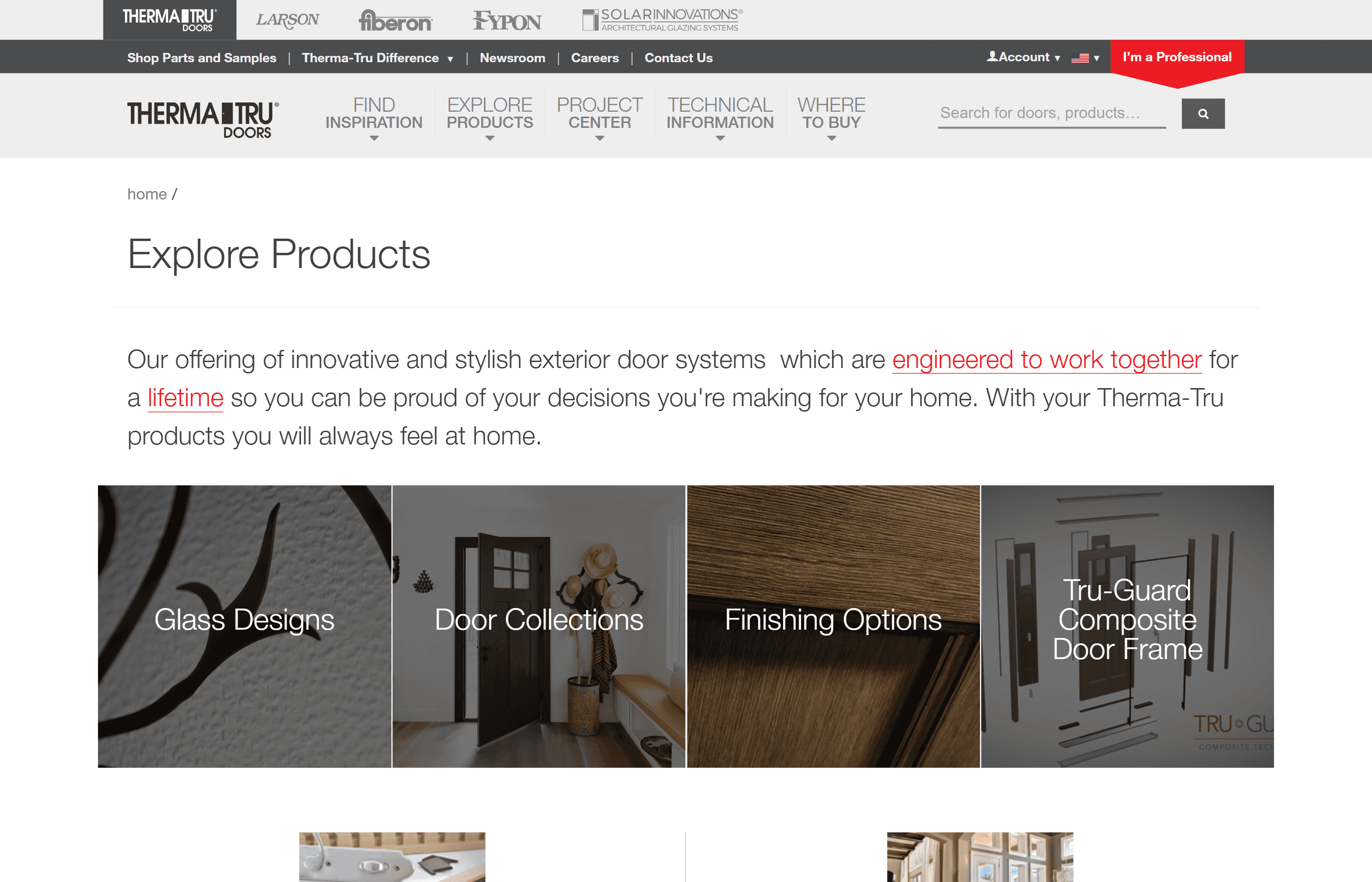
Enterprise website rebuild involving reusable frontend components, product pages, and interactive features including geolocation and dealer lookup.
Technologies
JavaScript, jQuery, Episerver CMS, Google Maps API, Geolocation API, HTML5, CSS3, Version Control (Git)
Role
Frontend Developer (Contributor & Mentor)
My Role
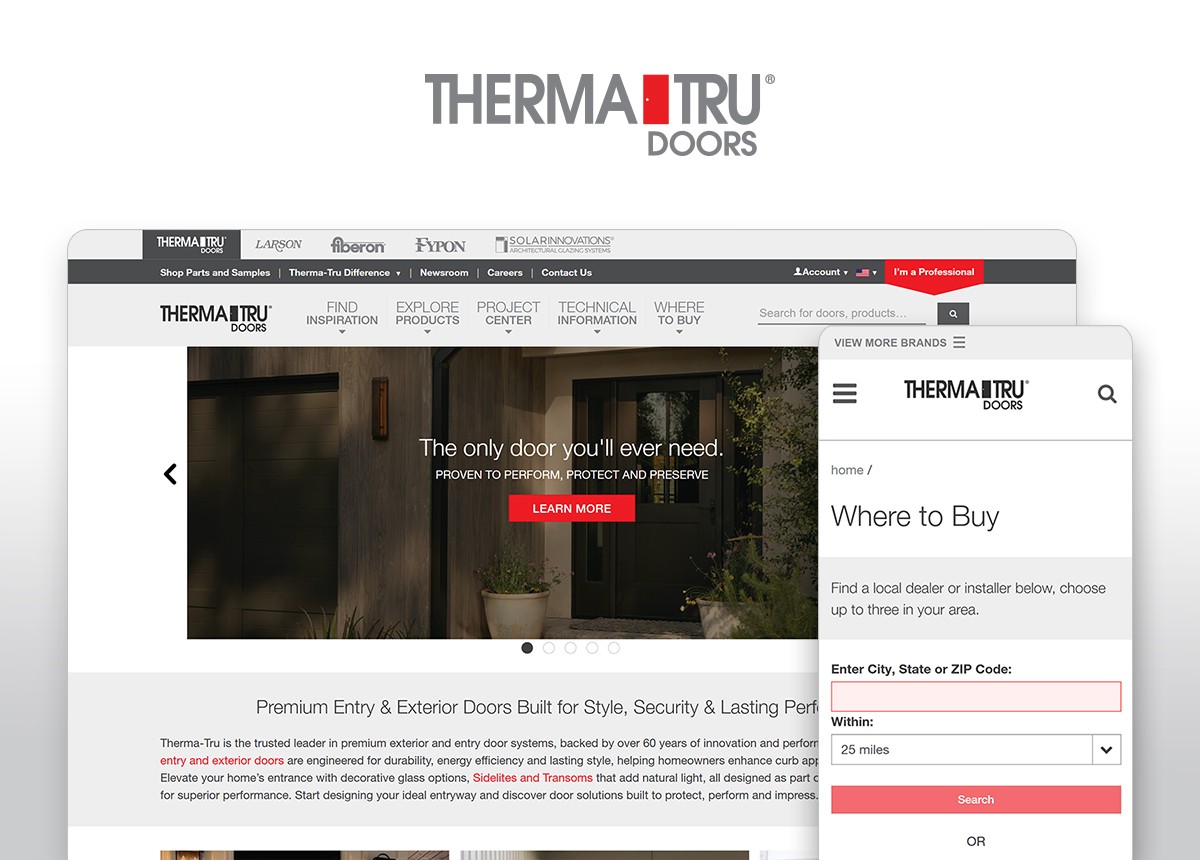
I worked as a frontend developer on a team rebuilding Thermatru’s primary website. Designs were provided by the design department, and I collaborated with a frontend manager, project managers, and backend engineers to implement the new system.
A large part of my work involved building out the reusable component library that powered the site. I developed many of the core UI modules and worked closely with two interns, guiding their implementation approach and teaching version control best practices.
I participated in architecture discussions around how components should be structured and integrated into Episerver (now Optimizely), helping ensure the frontend remained scalable and maintainable as the project evolved.
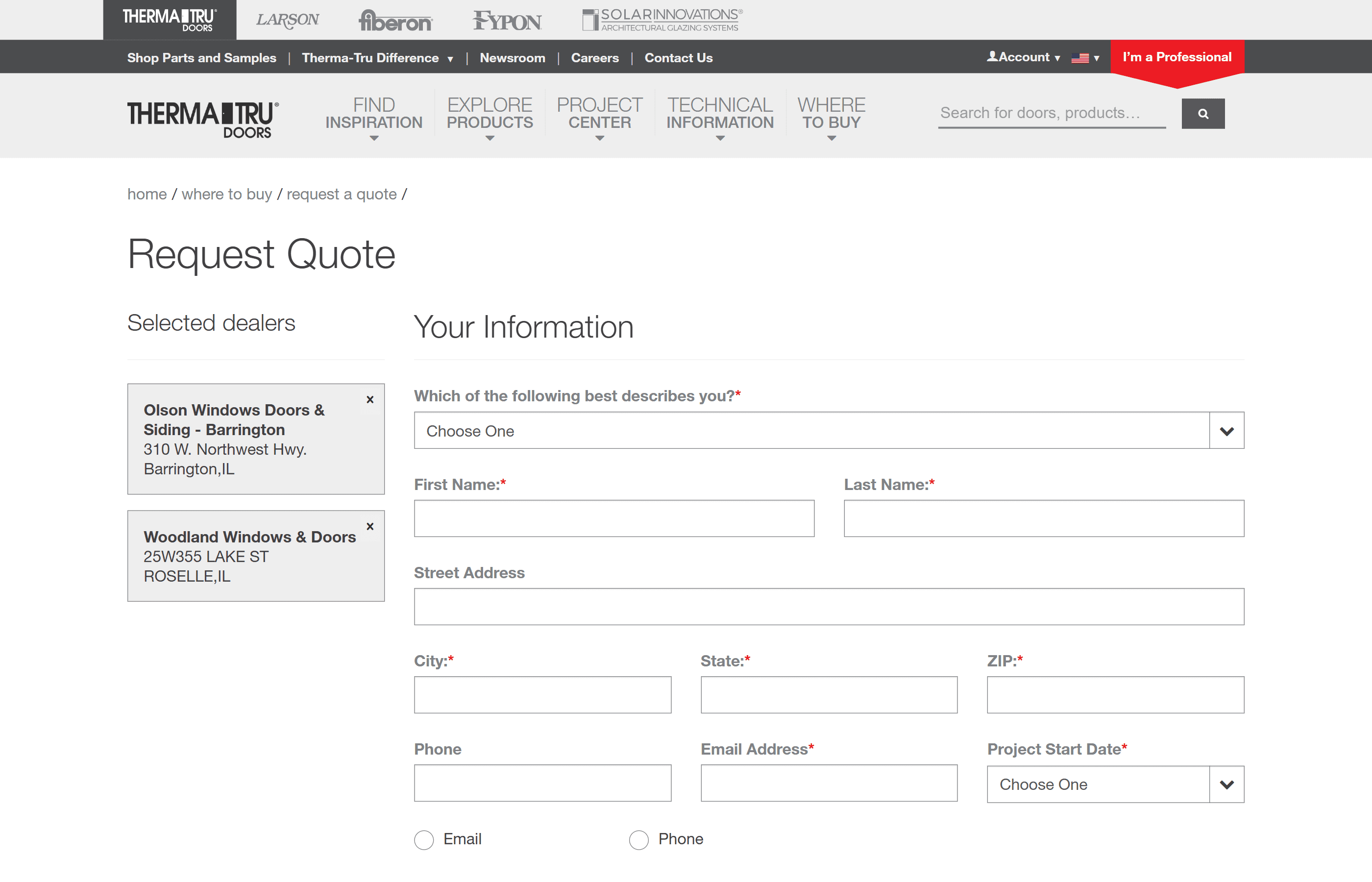
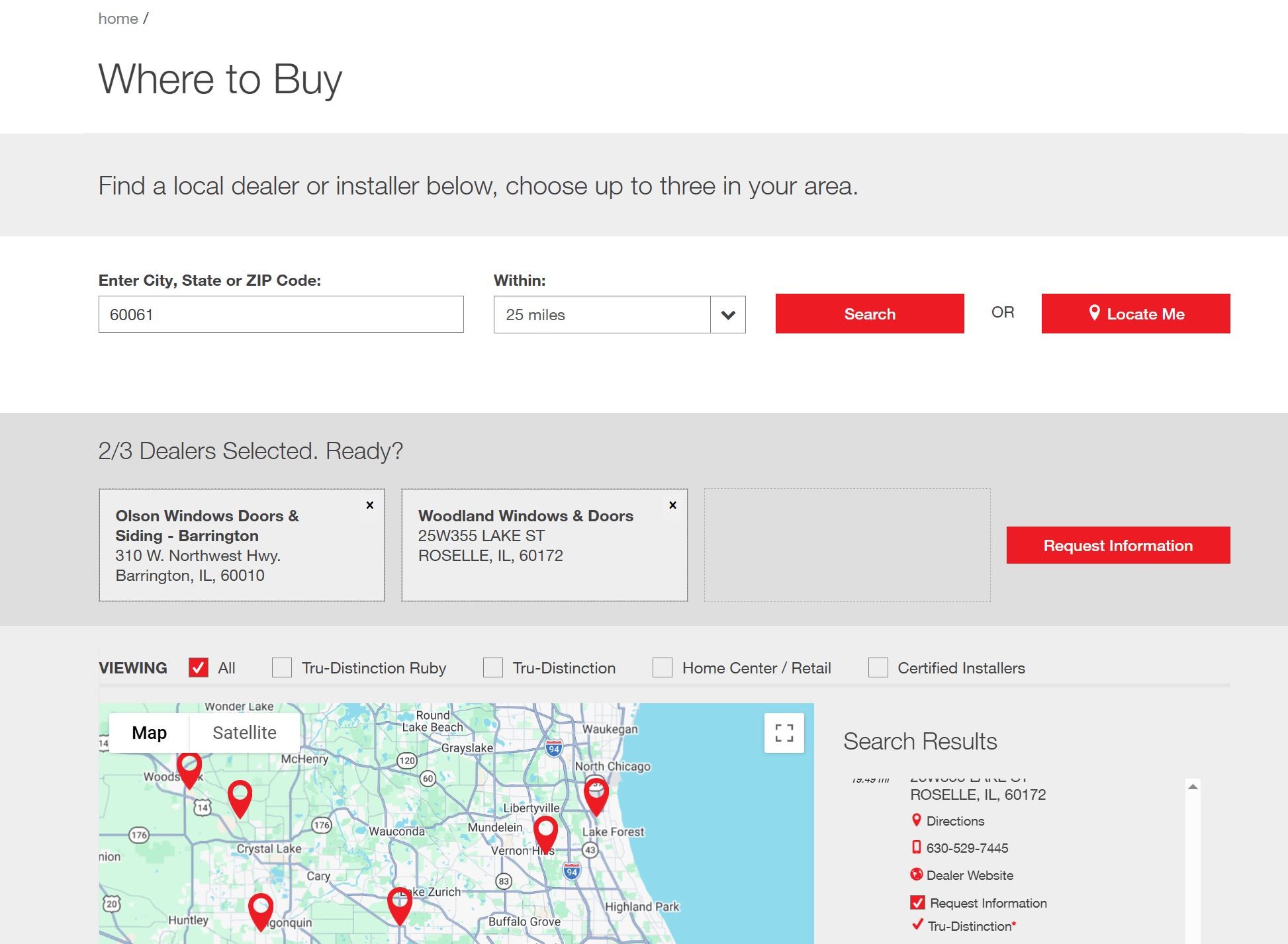
In addition to component development, I worked on key interactive features including product pages, the “Where to Buy” dealer locator using Google Maps and browser geolocation, and portions of the “Design Your Door” experience. Performance improvements and refactoring were incorporated throughout the rebuild as new requirements emerged.
Approach
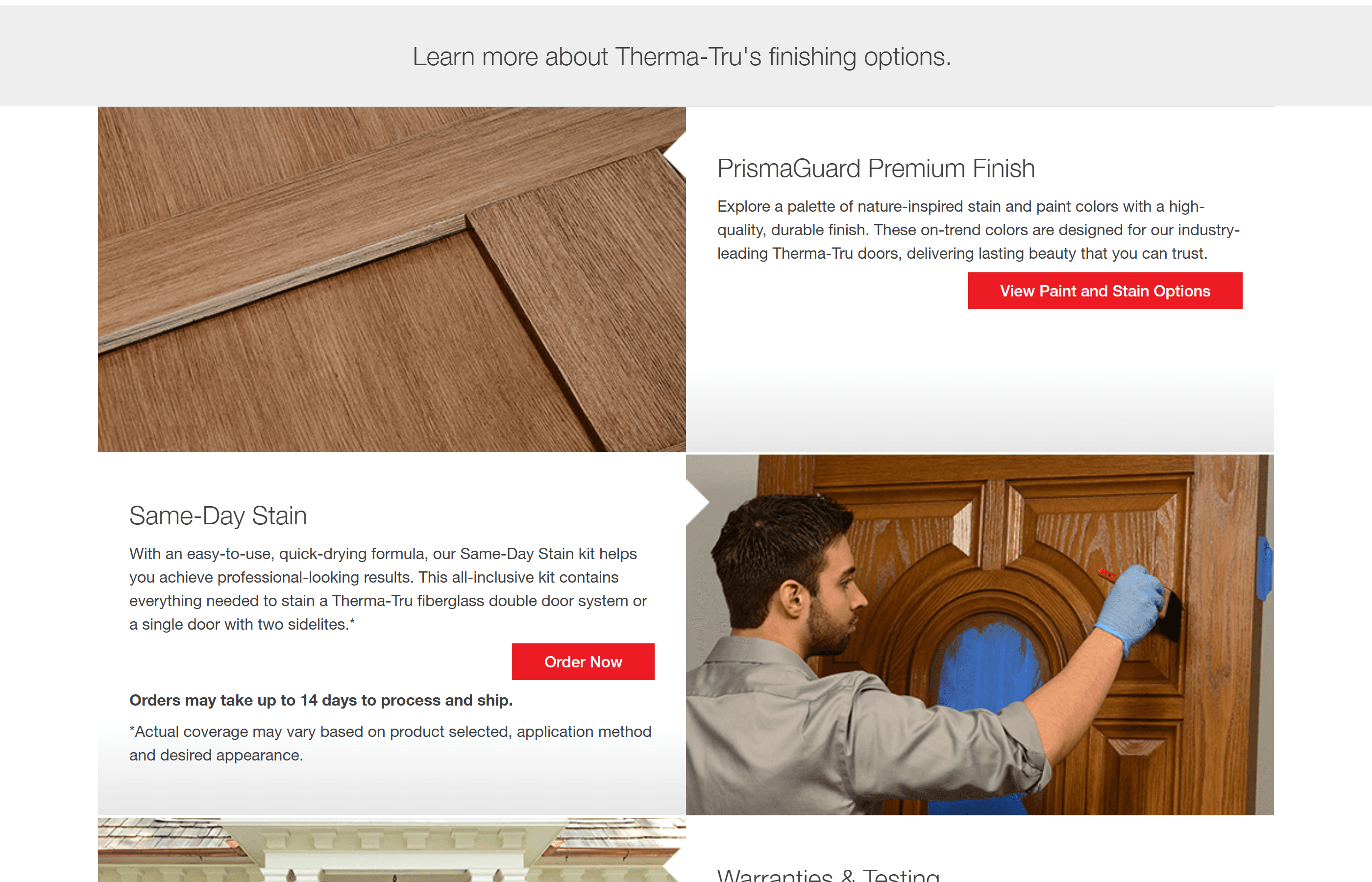
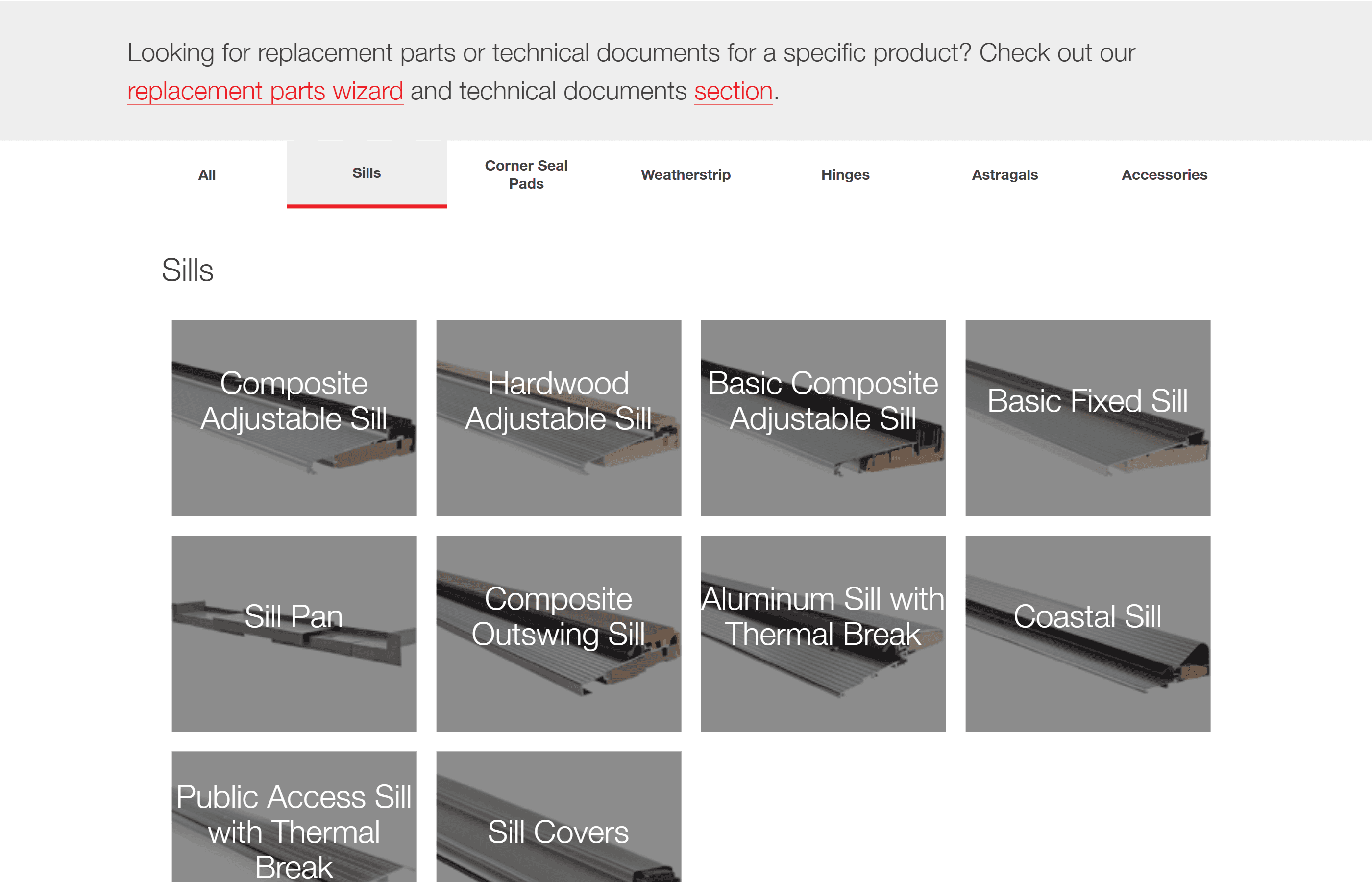
The rebuild centered around a reusable component system designed to scale as new pages and features were introduced. Instead of building one-off page templates, we focused on modular UI elements that could be assembled and reused across multiple contexts. I developed many of these components and ensured consistent behavior across page types.
Because the site was powered by Episerver (now Optimizely), frontend implementation needed to align closely with backend content structures. I worked with backend developers to ensure data models and rendering logic supported the intended user experience while keeping CMS complexity manageable.
Several features required more advanced interaction patterns. The “Where to Buy” tool integrated Google Maps and browser geolocation to surface nearby dealers dynamically. Product pages supported configurable content states and richer interactive elements.
To maintain flexibility and performance, we implemented client-side templating using Handlebars.js, separating data from markup to improve maintainability and rendering clarity. We also developed a lightweight internal animation framework to coordinate UI transitions and improve perceived performance without introducing heavy third-party libraries.
Outcomes
The rebuild replaced Thermatru’s legacy website with a more modern, component-driven system that supported a more interactive customer experience. Product pages and tools like “Where to Buy” became more dynamic and easier to maintain as new features were introduced.
The modular frontend approach made it easier for teams to extend the site over time without rebuilding core structures. Interactive features and performance improvements helped align the platform with evolving customer expectations in a more mobile-first environment.
Although some features were later retired as the digital experience continued to evolve, the component foundation and interactive systems established during the rebuild remained central to the platform’s structure.
Other projects

Cruise Lines International Association – Vendor Member Directory
Authenticated directory application combining multiple CRM endpoints into a unified search experience

Fathead – Ecommerce Frontend Rebuild
Modernizing a legacy ecommerce frontend within a large engineering team

Test Management Systems, Inc. – Corporate Website Rebuild
Informational B2B website built for compliance, and vendor communication
Aquastar Pools – Lead Generation Website Redesign
Custom WordPress rebuild focused on credibility, performance, and local SEO

Alight – Workday Rising Campaign & Marketing Automation
Email and landing page development supporting a major enterprise conference presence
Lance & Momoko – Multilingual Event Web Application
Multilingual wedding event platform with structured RSVP workflow and data exporting

Status Quo – Automated Podcast Website
Brand identity and automated web platform built to support podcast growth and platform migration